






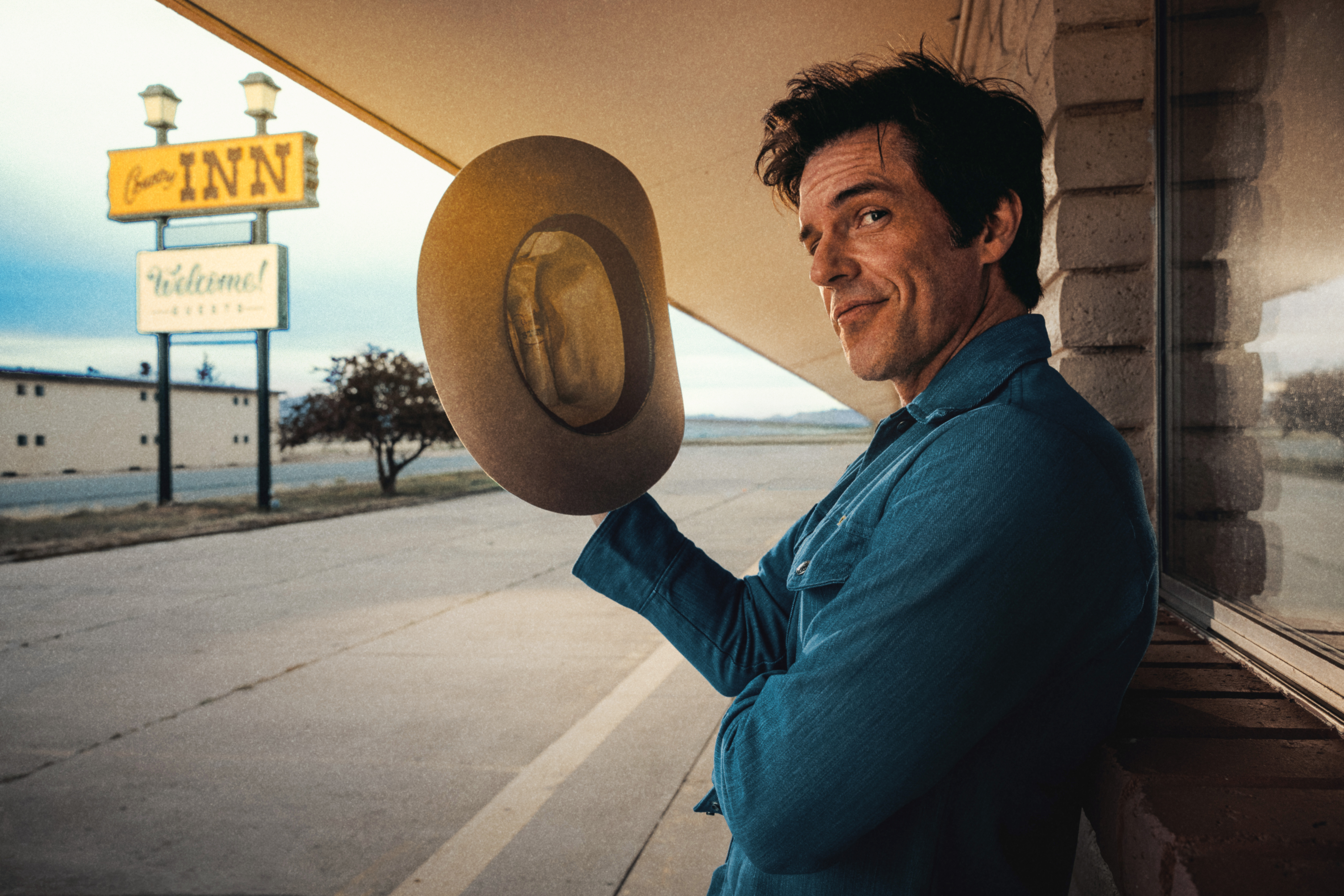
About Brandon Flowers:
“I’ve been keeping the secret of my upbringing,” Brandon Flowers laughs. We all know the story, fittingly mythological: a Mormon raised in the seedy glimmer of casinos, destined for rock ‘n’ roll stardom. But before that, Flowers was a teenager in small-town Utah, taken with the new wave and post-punk and Britpop his brother had shown him, yet spending just as much time driving the countryside with his dad and hearing Johnny Cash and Waylon Jennings songs reflect his surroundings back at him. Those seemingly disparate influences have converged in Flowers’ music for twenty years, but he only rarely wrote about that chapter of his life. As he entered his forties, he began reflecting not only on the whirlwind of his adulthood as a rockstar, but also on his formative years in Utah. Ideas swirled, then arrived in the form of the music that first taught him about storytelling. They culminated in Flowers’ third solo album Thrasher, the most personal collection of songs he’s ever written.
After moving back to Utah, Flowers began to pull the curtain back on The Killers’ most recent album, 2021’s Pressure Machine. Though most often associated with Las Vegas, most of Flowers’ youth actually occurred in Nephi, the small Utah town some two hours south of Salt Lake City. Now back home again, he showed his own children the scenes that made him who he was as a young man. Much of the music Flowers has worked on in the ensuing five years began as a direct continuation, forging deeper into foundational sounds and foundational memories. He began to recognize the “big and shiny fantasy” of Las Vegas that so often courses through The Killers’ music wasn’t the right home for this writing, and he embarked on his first solo endeavor in over a decade. Though Americana and Western stylings have often mingled with the alternative traditions in The Killers’ DNA as far back as their 2006 sophomore outing Sam’s Town all the way on to Pressure Machine, Flowers found that he’d tapped a new, rich vein of his songwriting: “As I’ve gotten older, I’ve found my way back to my father’s music — ‘Country-Western’ — and discovered that the stories I carry really feel most at home in the skin of this beautiful American tradition.”
